SEO
is-seo-replaced-by-ai?
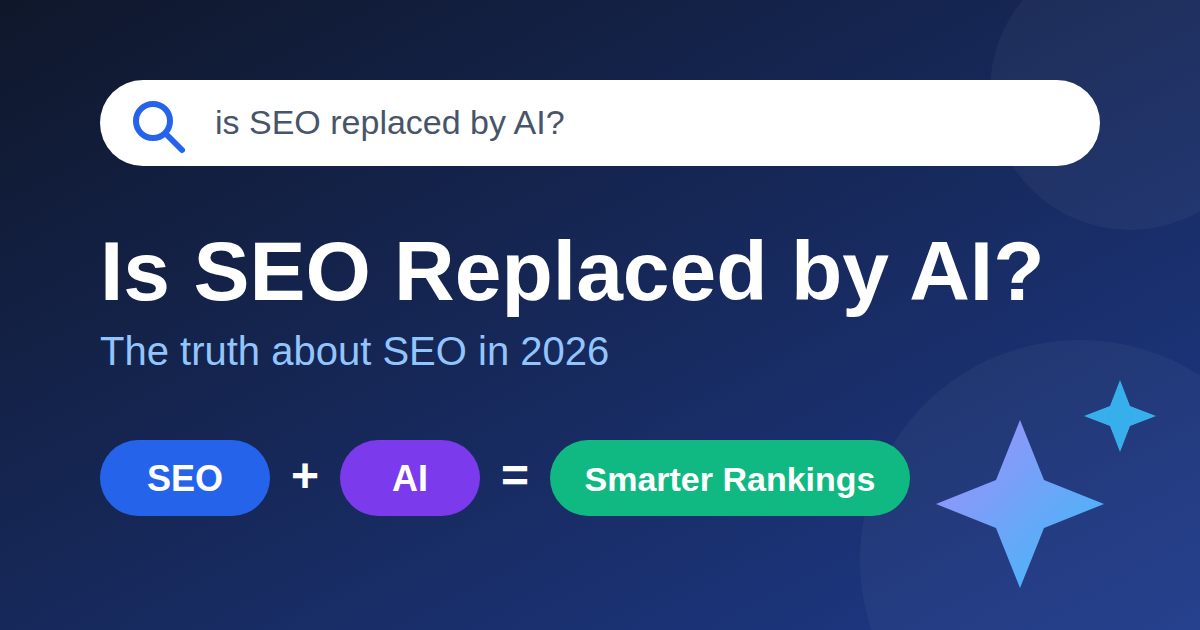
Is SEO Replaced by AI? The Truth About SEO in 2026
Is SEO replaced by AI? It is the question every marketer, blogger, and business owner is asking right now. With ChatGPT, Google AI Overviews, and Perplexity answering questions directly, it is easy to believe that search engine optimization is on its way out. The short answer is no. SEO is not dead, but it is changing fast, and the people who adapt will win more visibility than ever.
In this guide, you will learn what AI has actually changed, what still matters, and how to build an SEO strategy that works in the age of AI search.
Why People Think AI Is Replacing SEO
The fear is understandable. Here is what changed:
- AI Overviews now answer many queries at the top of the search engine results page (SERP), so fewer people click through.
- Zero-click searches are rising, which means users get answers without visiting a website.
- Chatbots like ChatGPT and Perplexity act as alternative search engines for millions of people.
- AI-generated content has flooded the web, making it harder to stand out.
When your organic traffic dips, it feels like the end. But look closer and a different picture appears.
Why SEO Is Not Replaced by AI
1. AI Needs Sources, and Those Sources Are Websites
Generative AI does not invent knowledge from nothing. It learns from, and often cites, web pages. Pages that rank well, load fast, and show real expertise are the ones AI tools tend to pull from. Good SEO makes your content easier for both search engines and AI systems to find, understand, and trust.
2. Search Intent Still Drives Everything
People still search to learn, compare, buy, and solve problems. Understanding search intent is just as important as before, maybe more. If your page matches what the user truly wants, you win, whether the result appears in a classic listing or an AI-generated summary.
3. Google Still Rewards Quality and Trust
Google’s ranking systems continue to reward E-E-A-T: Experience, Expertise, Authoritativeness, and Trustworthiness. Mass-produced AI text with no real insight rarely earns these signals. Original examples, first-hand experience, and accurate information still set great content apart.
4. Technical SEO Matters More Than Ever
AI crawlers and search bots both need clean, accessible sites. Fast loading, mobile-friendly design, a logical site structure, and structured data (schema markup) help machines understand your content. Poor technical SEO hurts you in every kind of search.
How AI Is Actually Changing SEO
AI is not replacing SEO. It is upgrading it. Here is what is different:
| Old SEO focusNew SEO focus | |
| Single keywords | Topics and topical authority |
| Ranking #1 only | Being cited in AI answers too |
| Keyword stuffing | Natural, conversational language |
| Volume of content | Depth and originality |
| Clicks alone | Brand visibility and trust |
Meet AEO and GEO
Two new terms are now part of the conversation:
- Answer Engine Optimization (AEO): Structuring your content to give clear, direct answers to questions.
- Generative Engine Optimization (GEO): Making your content likely to be referenced by AI tools such as ChatGPT and Google’s AI features.
Both build on traditional SEO. They do not replace it.
How to Do SEO in the Age of AI
Write for humans first
Use simple, natural language. Answer the question early, then add depth. Short paragraphs, clear headings, and real examples make your content useful to readers and easy for AI to summarize.
Do smarter keyword research
Go beyond a single keyword. Include related terms, questions people ask, and long-tail phrases. Cover the whole topic so search engines see you as a true authority.
Add original value
AI can repeat what is already online. It cannot share your personal experience, original data, case studies, or expert opinion. Add these, and your content becomes harder to replace.
Use AI as a tool, not a replacement
AI is excellent for outlining, brainstorming, and cleaning up drafts. But always edit, fact-check, and add your own voice. Publishing raw AI output is the fastest way to lose trust and rankings.
Build high-quality backlinks
Backlinks remain one of the strongest trust signals. Earn them through guest posting, digital PR, original research, and helpful resources that others want to cite. Quality beats quantity every time.
Strengthen your brand
AI tools tend to mention brands that are widely recognized and discussed. Consistent publishing, reviews, social presence, and mentions across the web all help.
Keep your content fresh
Update old posts with new facts and examples. Fresh, accurate content is more likely to be cited and to hold its rankings.
The Future of SEO
SEO will keep evolving, just as it did when mobile search, voice search, and featured snippets arrived. Each time, people predicted the end of SEO, and each time the discipline grew. The goal has never changed: be the most helpful, trustworthy result for the person searching. AI just gives that goal more places to show up.
Final Thoughts
So, is SEO replaced by AI? No. AI has changed how people find information, but it still relies on high-quality, well-optimized content created by real experts. Businesses that combine strong SEO fundamentals with AI-aware strategies like AEO and GEO will keep growing their organic traffic while others struggle.
Stop asking whether SEO is dead. Start asking how to make your content the answer, wherever people are searching.
FAQs
Will AI take over SEO jobs?
AI will automate repetitive tasks, but strategy, creativity, and judgment still need humans. SEO roles are shifting, not disappearing.
Does Google penalize AI-generated content?
Google does not penalize content just because AI helped write it. It penalizes low-quality, unhelpful content, however it was made.
Should I still do keyword research?
Yes. Keyword research reveals what people want and helps you cover topics fully. It now focuses more on topics and questions than on single phrases.
Can ChatGPT replace Google search?
Many people use both. Google remains the dominant search engine, while AI chatbots are growing as a complement.